

Future of Military Logistics: Top Technologies Driving Speed, Scale, and Resilience

Military logistics doesn’t usually get attention until something breaks.
A delayed shipment. A missing component. Fuel that doesn’t arrive when expected. In civilian supply chains, these are problems. In military operations, they can escalate quickly into risks.
That’s partly why logistics is being looked at differently now.
Not as a backend function—but as something that directly shapes operational readiness.
The shift isn’t dramatic on the surface. There’s no single breakthrough moment. Instead, it’s happening through a series of changes—technology-led, but also driven by necessity. And if you look closely, the Defense Supply Chain today doesn’t resemble what it did even a decade ago.
The Old Model Worked—Until It Didn’t
For a long time, Defense Logistics Systems were built around predictability.
You had defined supply routes. Known demand cycles. Centralized storage. And enough buffer stock to absorb delays.
That model worked in structured environments.
But modern operations aren’t structured in the same way anymore.
Deployments are more dispersed. Timelines are tighter. And uncertainty, be it due to geopolitical changes or cyber threats, has become a component of the equation.
So the question isn’t “how to optimize logistics.”
It’s closer to: how do you keep it functioning when conditions stop cooperating?
That’s where Military Logistics Technologies start to come into play—not as upgrades, but as enablers of a different approach.
It’s No Longer a Chain. It’s a Network.
One noticeable change is how the Defense Supply Chain is being reimagined.
Previously, it had acted like a chain, linear, sequential and to a certain degree rigid.
Now, it’s moving toward something more networked.
Multiple nodes. Alternate pathways. Systems that can reroute without waiting for top-down decisions.
This is being supported by Defense supply chain management technologies, but the intent goes beyond digitization.
It’s about reducing dependency on any single point—whether that’s a warehouse, a supplier, or a transport route.
Because in real-world scenarios, those points fail more often than plans assume.
Visibility Helps—But Only If It Leads to Action
There’s been a lot of focus on real-time visibility, and rightly so.
Knowing where assets are, how they’re moving, and what condition they’re in—it all matters.
But visibility by itself doesn’t solve much.
The real shift is happening in how that information is used.
With Digital logistics solutions for defense, data is no longer just monitored—it’s interpreted. Patterns are identified. Exceptions are flagged early.
For example:
- If a route consistently slows down under certain conditions, the system learns that
- If demand spikes in a specific region during certain operations, it becomes predictable
- If equipment failure rates increase, maintenance cycles adjust
This is where Advanced military logistics systems begin to show their value—not in tracking, but in anticipating.
Automation Is Finding Its Place—Carefully
There’s a tendency to assume automation will take over everything. In military logistics, that’s not quite how it’s playing out.
Yes, Military logistics automation systems are being adopted—but selectively.
Inside warehouses and controlled facilities, automation fits naturally:
- Inventory handling becomes faster
- Errors reduce
- Processes become more consistent
But outside, especially in operational zones, things get complicated.
Terrain changes. Conditions shift. Situations evolve in ways that are hard to pre-program.
So instead of full automation, what’s emerging is a balance.
Machines handle repetition. Humans handle uncertainty.
It is not as futuristic as it sounds-but it is practical.
Transportation Is Where Change Becomes Visible
If there’s one area where transformation is easier to notice, it’s transportation.
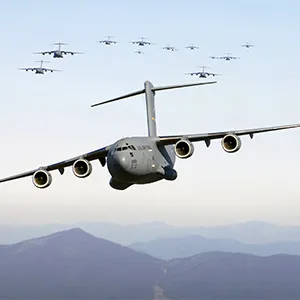
Traditional Military Transportation Systems still form the backbone—trucks, aircraft, naval carriers.
However, with them, more contemporary methods are beginning to take their place.
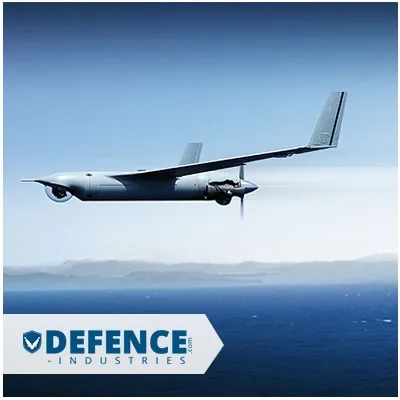
UAVs are under trial in making supply deliveries to risky areas. Drones are being used—not everywhere—but in very specific scenarios where speed matters more than volume.
Think medical supplies. Critical parts. Urgent deliveries.
These systems aren’t replacing conventional transport. They’re extending it.
And sometimes, that extension is what keeps operations moving.
AI Is Useful—But Not in the Way It’s Often Described
Artificial intelligence is part of the conversation, but it’s not operating as a standalone solution.
In Advanced defense logistics systems for modern warfare operations, AI works more like an assistant than a controller.
It processes large datasets quickly. It suggests options. It highlights risks.
But decisions? Those still involve human judgment.
Because logistics in defense isn’t just about efficiency. It’s about context—something algorithms are still catching up with.
That said, AI is proving useful in areas like:
- Route adjustments when conditions change
- Demand forecasting based on past operations
- Resource prioritization when supplies are limited
It’s not perfect. But it’s becoming hard to ignore.
Security Is Now Built Into the System
As logistics becomes more digital, it also becomes more exposed.
Cyber risks are no longer separate from supply chain risks—they’re part of the same problem.
This is why security is not being placed as an overlay to the Defense Supply Chain.
Such technologies as blockchain are under investigation, not due to being a fad, but because they provide traceability.
Knowing where something came from, who handled it, and whether it’s been altered—that level of visibility matters more in defense than in most industries.
Rethinking Inventory: Less Storage, More Access
One of the quieter changes is happening in how inventory is managed.
Instead of storing everything in advance, there’s growing interest in producing certain components on demand.
Additive manufacturing is enabling this shift.
It doesn’t apply to everything—but where it does, it reduces dependency on long supply lines.
And in scenarios where resupply is uncertain, that flexibility supports Scalable and resilient logistics solutions for defense forces in a very direct way.
Resilience Isn’t a Feature. It’s the Goal.
The one theme that could be seen to unite all this is resilience.
Not avoiding disruption—but operating through it.
Modern Defense Logistics Systems are being designed with that expectation:
- Systems will fail
- Routes will be blocked
- Supplies will be delayed
And yet, operations need to continue.
This is why distributed networks, multi-modal transport, and adaptive planning are gaining importance.
Not because they’re efficient in ideal conditions—but because they hold up when conditions aren’t ideal.
The Truth: Progress is Not even.
It is worth mentioning the fact that adoption is not uniform.
There are instances of defense organizations which are more quick-paced that are experimenting with more modern technologies. Others are working within constraints—budget, infrastructure, or policy.
Integration is another challenge.
New systems don’t always align easily with older ones. And in big organizations change does not occur in a day.
And thus the direction can be directed, yet the speed can be slow.
Looking Ahead
The future of military logistics won’t depend on a single breakthrough.
It will come from how different technologies come together—and how well they’re implemented.
The combination of:
- Military Logistics Technologies
- Defense supply chain management technologies
- Digital logistics solutions for defense
…is already shaping a more flexible, responsive system.
Not perfect. But more prepared than before.
Closing Thought
Logistics does not win wars.
But without it, very little else works.
What’s changing now is not just the tools—but the way logistics is viewed. Not as a support function, but as a capability per se.
And, with the ongoing development of operations, that change will be more important than a particular technology.
 Our Services
 Media Pack Download
 Newsletters
 Industrial Events