

Best Remotely Operated Defense Vehicles for Intelligence and Tactical Missions
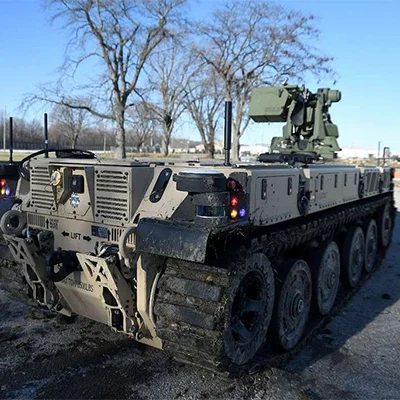
Walk into any modern defense briefing today, and one thing becomes clear very quickly—machines are no longer just assisting missions, they’re shaping them.
The rise of Unmanned Defense Vehicles didn’t happen overnight. It came out of necessity. Missions became riskier, environments more unpredictable, and the cost of human exposure too high to ignore. What started as basic bomb disposal units has now expanded into a wide range of Robotic Military Vehicles that handle surveillance, transport, and even direct engagement in certain cases.
But not every system is worth the investment. Some platforms perform well in controlled demonstrations but struggle in real terrain. Others excel because they’re built with practical battlefield constraints in mind. So instead of listing every known platform, it makes more sense to look at what actually works—and why.
Where Remotely Operated Systems Make the Biggest Difference
There are still situations where human presence is unavoidable. But there’s a growing list where it simply isn’t necessary anymore.
This is where Remotely operated military vehicles have proven their value. Not in theory—but in day-to-day operations. Border patrol units use them for long-hour surveillance. Tactical teams deploy them before entering structures. Logistics teams rely on them to move supplies across exposed zones.
The biggest advantage isn’t just safety. It’s perspective.
A robotic unit can move ahead, pause, scan, and transmit data without pressure or fatigue. That alone changes how decisions are made on the ground.
The Most Practical Types of Unmanned Ground Vehicles in Use
Not all Unmanned ground vehicles for defense are designed for combat. In fact, many of the most useful ones never fire a weapon.
Reconnaissance Platforms That Actually Deliver
These are the workhorses of modern operations. They don’t look dramatic, but they’re often the first assets deployed.
Fitted with cameras, thermal sensors, and basic mapping tools, they’re used to check what’s ahead—whether that’s a building, a roadside object, or a stretch of border that hasn’t been cleared.
What makes the newer generation of Advanced robotic defense vehicles for surveillance and reconnaissance stand out is how quietly they operate. Less noise, smaller footprint, and better image clarity—even in low visibility.
They don’t just send back footage. They give context.
Armed Robotic Units—Useful, But Used Carefully
There’s a lot of attention around weaponized systems, but in reality, they’re deployed far more selectively than people assume.
Yes, some Robotic Military Vehicles now come equipped with mounted weapons. And yes, they are effective in controlled tactical scenarios. But most forces still prefer to keep a human firmly in control when engagement is involved.
Where they do make sense:
- Perimeter defense in high-risk zones
- Situations where visibility is limited but threat probability is high
- Operations where human approach would trigger immediate danger
They’re not replacing soldiers. They’re extending their reach.
Multi-Purpose Carriers That Solve Everyday Problems
Not every mission is about combat. A lot of military effort goes into movement—of supplies, equipment, and sometimes injured personnel.
This is where Unmanned Defense Vehicles designed for transport quietly prove their worth.
They don’t attract attention, but they reduce workload significantly. Instead of exposing teams to repeated trips across risky terrain, a robotic carrier handles it.
Over time, that kind of efficiency adds up.
Small-Scale Units Built for Tight Spaces
Urban environments don’t allow much room for error. Narrow corridors, blind corners, and confined structures make visibility a challenge.
Smaller Unmanned ground vehicles for defense are built specifically for this. They’re not powerful, but they’re precise.
They can:
- Enter buildings before a team does
- Inspect suspicious objects
- Move through spaces where larger units can’t
In many operations, these units are the difference between guessing and knowing.
Autonomy: Helpful, But Not a Replacement
There’s a lot of discussion around Autonomous military vehicle systems, but the reality is more grounded.
Autonomy today is mostly about assistance, not independence.
Vehicles can follow routes, avoid obstacles, and stabilize themselves without constant input. That’s useful. It reduces operator workload and improves consistency.
But when it comes to unpredictable situations—especially anything involving conflict—human judgment still leads.
And that’s unlikely to change anytime soon.
What Separates a Reliable System from an Average One
On paper, many Military robotic vehicle systems look similar. In practice, the differences show up quickly.
The systems that actually perform well tend to share a few characteristics:
- They maintain signal stability even in interference-heavy zones
- They’re built to handle rough terrain without constant recalibration
- Their controls are simple enough to use under pressure
- They don’t require frequent downtime for maintenance
In other words, they’re designed for real conditions—not ideal ones.
Where These Vehicles Are Used Most Often
The role of Remote-operated military vehicles for modern battlefield missions isn’t limited to one type of operation. Their value shows up across multiple scenarios.
Surveillance
Long-duration monitoring without fatigue or distraction.
Pre-Entry Recon
Checking environments before personnel move in.
Threat Handling
Especially in cases involving explosives or unknown objects.
Field Logistics
Reducing the need for repeated human movement in exposed areas.
None of these are headline-grabbing uses. But they’re critical.
Limitations That Still Matter
In spite of the progress, gaps still exist.
There is a weakness in communication. If the signal drops, the system becomes far less useful. In contested environments, that’s a real concern.
Cost is another factor. Developing and maintaining advanced Robotic Military Vehicles isn’t cheap, especially when upgrades are needed.
And then there’s the issue of over-reliance. These systems are not substitutes, but tools. They may give a false sense of confidence when unplanned.
What’s Changing Going Forward
The next phase isn’t about bigger or more powerful machines. It’s about smarter coordination.
Early developments are underway to create systems capable of working in groups - sharing data, covering more ground, and limiting blind spots. It is not completely in place, but the trend is apparent. At the same time, improvements in AI are making Advanced robotic defense vehicles for surveillance and reconnaissance more responsive. Not independent, but quicker to assist.
And behind it all, cybersecurity is emerging to be as significant as hardware. Any system that is compromised is not better than none.
Closing Perspective
The conversation around Unmanned Defense Vehicles often focuses on innovation, but their real value is much simpler—they make difficult tasks more manageable.
They don’t eliminate risk. They redistribute it.
For defense organizations, the challenge isn’t whether to adopt these systems. That decision has already been made. The real question is how to integrate them effectively alongside human teams.
Because at the end of the day, even the most advanced Remote-operated military vehicles for modern battlefield missions still depend on the people behind them.
 Our Services
 Media Pack Download
 Newsletters
 Industrial Events