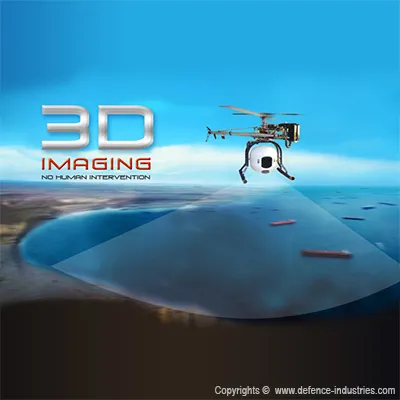


Advanced Defense Surveillance Solutions for High-Accuracy Threat Identification

Why Surveillance is No More Than Monitoring?
Surveillance in the modern world of defense is no longer a matter of watching it is a matter of knowing. The change is not dramatic but significant. Previously, the systems were configured to identify movement or intrusion. Now, the expectation is to identify intent, classify risk, and support decisions in real time.
That’s where advanced defense surveillance solutions for threat identification come into play. These are not stand-alone tools but stacked systems designed to work across spaces of environments border zones, urban areas, maritime corridors and even the airspace that is at war.
This change is causing a reconsideration among the organizations that deal with defense technology. It’s no longer enough to build hardware. The value now lies in how well systems connect, interpret, and respond.
The Problem with Traditional Threat Detection Systems
Most legacy threat detection systems still operate in fragments. A radar system does its job. A camera system does its job. Signals intelligence sits somewhere else. The issue is not capability—it’s coordination.
In real scenarios, this lack of integration slows things down:
- Alerts come in, but without context
- Operators need to cross-check manually
- Response decisions get delayed
Modern defense threat detection technologies are trying to fix this by focusing on correlation instead of collection. The idea is simple: data is only useful when it’s connected.
This is where many defense programs struggle—not because technology is unavailable, but because integration is harder than expected.
Intelligence Surveillance Reconnaissance Systems: Still Central, But Evolving
Intelligence Surveillance Reconnaissance Systems have always been critical, but what’s changing is how they are structured.
Earlier ISR setups were largely hierarchical—data moved up, decisions came down. Today, that model is too slow.
The newer approach, especially with integrated ISR systems for defense threat detection and monitoring, is more distributed:
- Data is processed closer to where it’s collected
- Insights are shared across units, not just command centers
- Systems are expected to operate even with limited connectivity
For B2B players, this has implications. ISR is no longer a single system—it’s an ecosystem. Hardware vendors, analytics providers, and communication network developers all need to align, which is easier said than done.
Why Multi-Sensor Surveillance Systems Are Becoming Standard
It is dangerous to depend on one sensor during the war. States vary, circumstances intervene, and enemies change.
This is the reason why multi-sensor surveillance systems are rapidly becoming the entry-level and not the upgrade.
A typical setup might combine:
- Radar for range and movement
- Electro-optical cameras for visual confirmation
- Infrared for low-visibility conditions
- Signal intercept systems for communication tracking
Individually, each of these has limitations. Together, they reduce uncertainty.
What’s interesting from a deployment perspective is that the challenge isn’t adding sensors—it’s making them work together without overwhelming operators. Too much data, without filtering, creates its own problems.
Integration: Where Most Projects Succeed or Fail
If there’s one area that defines the success of integrated surveillance systems for defense, it’s integration itself.
Many systems perform well in controlled environments. But in real deployments, issues show up:
- Compatibility gaps between vendors
- Data formats that don’t align
- Latency in communication layers
The trend has shifted to open systems and modular systems. There is a growing demand by defense agencies to have solutions that can be integrated into an existing infrastructure rather than one that replaces all the infrastructure.
In the case of companies that sell high-level military surveillance systems, this implies that they have to think beyond the delivery of products. The support of integration, interoperability and long-term scalability is growing into a point of difference.
Accuracy Is the Real Benchmark Now
Speed used to be the priority. Now it’s accuracy.
False positives are not a mere inconvenience in high-risk environments, they consume resources and decrease system trust. Meanwhile, false alarms are of course not acceptable.
This is why high-accuracy military surveillance systems for modern warfare are focusing heavily on:
- Data validation across sources
- Context-aware analytics
- Continuous learning models
For example, detecting a drone is not enough. The system needs to determine:
- Is it commercial or hostile?
- Is it part of a pattern?
- Does it require immediate response?
These are not simple yes/no questions, and that’s where advanced systems are trying to add value.
The Role of AI—Useful, But Not a Silver Bullet
Artificial intelligence is now embedded in most defense threat detection technologies, but there’s a growing understanding that it’s not a magic solution.
AI works well in:
- Pattern recognition
- Image and signal classification
- Detecting outliers in massive data sets.
But it still depends heavily on:
- Data quality
- Training models
- Real-world validation
In integrated ISR systems for defense threat detection and monitoring, AI is most effective when it supports human operators rather than replacing them.
From a B2B perspective, this is important. Clients are not just buying AI—they’re buying reliability. And that needs constant fine-tuning, updates and domain knowledge.
Real-Time Data Fusion: Simple Said Than Done
Data fusion sounds straightforward—combine multiple inputs and present a unified picture. In practice, it’s one of the most complex parts of advanced defense surveillance solutions for threat identification.
Challenges include:
- Synchronizing data from different sources
- Handling conflicting inputs
- Maintaining low latency
When done right, though, it changes everything. Operators don’t need to switch between systems. They see a consolidated view, with prioritized alerts and supporting context.
This is where many advanced military surveillance systems are heading, but achieving this consistently across environments is still a work in progress.
Cybersecurity Can’t Be an Afterthought
As surveillance systems become more connected, they also become more exposed.
Any modern integrated surveillance systems for defense must assume that cyber threats are part of the battlefield. This includes:
- Attempted data interception
- System disruptions
- Spoofing of signals or inputs
Encryption and access control are typical security features, however, not sufficient in themselves. Adaptive defense mechanisms and constant monitoring are now becoming mandatory.
For vendors, this means cybersecurity is no longer a separate offering—it’s embedded into the core system design.
Real-World Situation Problems in Deployment
Even highly sophisticated systems have practical limitations:
Infrastructure Limitations
Not all regions support high-bandwidth communication, which affects system performance.
Training Requirements
The operators require not only knowledge on how to operate the system, but also, how to interpret its output.
Cost vs. Scalability
Budgets are always a factor, especially when scaling across multiple locations.
Vendor Coordination
Large projects often involve multiple vendors, which increases complexity.
These are not minor issues. In many cases, they determine whether a system delivers value or becomes underutilized.
Where the Opportunities Are for B2B Companies
Despite the challenges, the demand for advanced defense surveillance solutions for threat identification is only growing.
Some of the areas seeing the most traction include:
- Sensor fusion platforms
- Edge-based processing systems
- AI-driven analytics tools
- Secure communication networks
Companies which comprehend realities of operations, not necessarily technical abilities, are in a better position to be successful.
What the Next Phase Looks Like
Looking ahead, integrated ISR systems for defense threat detection and monitoring will likely become more:
- Autonomous, with minimal manual intervention
- Distributed, rather than centralized
- Adaptive, learning from changing threat patterns
We’re also seeing early movement toward space-based surveillance integration and more advanced sensing technologies.
The end, however, is the same as before, this is to increase accuracy without decreasing response.
Final Thoughts
The conversation around advanced military surveillance systems has clearly moved beyond hardware. It’s now about how systems work together, how data is interpreted, and how quickly decisions can be made with confidence.
For defense organizations, the priority is clear—reduce uncertainty.
For B2B providers, the challenge is equally clear—build systems that don’t just detect threats, but help make sense of them in real time.
That’s ultimately what defines high-accuracy military surveillance systems for modern warfare today.
 Our Services
 Media Pack Download
 Newsletters
 Industrial Events